

Freight Procurement: How To Run Freight Tenders That Get Competitive Bids


You post a load for tomorrow, email 15 carriers, call the five you trust, and copy whatever comes back into a spreadsheet. Two hours later, the tender closes with two bids, and both sit above what the lane paid last month.
That’s how freight procurement still works at many shipping desks, and the real problem here isn’t the carriers. It’s the tender itself, because when bidding takes more effort than the load seems worth, most carriers simply don’t bid.
Below is the full process in more detail, the bid rules that bring more carriers in, how to negotiate inside the tender, and the KPIs that show you whether any of it worked.
What Is Freight Procurement?
Freight procurement is the process of buying transport capacity, which involves finding carriers, asking them for rates, choosing who moves the freight, and managing those rates over time. It covers both contract freight from annual bids and spot loads bought one at a time.
Three terms get mixed up here, and understanding their difference is a great starting point before building any strategies or splitting the work across your team:
| Term | What it covers | Output |
|---|---|---|
| Freight sourcing | Finding and vetting carriers: authority, insurance, safety record, equipment, and the lanes they run | An approved carrier list |
| Freight tendering | Sending a load or lane to carriers and collecting their bids | A set of bids you can compare |
| Freight procurement | The whole cycle, from sourcing and tendering to award, contract, and rate tracking | A carrier and a rate on every lane |
Sourcing usually runs in the background, for example through a single onboarding link that collects a carrier’s documents and signed contract, while tendering happens every time freight needs to move. Running all of these steps in one workflow, from outreach and bids to documents and tracking, is called freight procurement orchestration.
Freight Procurement Strategy: Contract, Spot, or Both
Every freight procurement strategy balances two main ways of buying:
- Contract rates come from an annual RFP (Request for Proposal), where carriers bid on lanes for the next 12 months.
- Spot rates come from tenders run load by load, at whatever the market pays that exact day.
Most shippers still lean on the annual cycle, 67.7% according to FreightWaves, to be exact, while only 12.9% run monthly or frequent mini-bids.
That same report shows why that’s also getting riskier in 2026 and beyond, highlighting that tender rejections rose above 13% by early 2026, up from roughly 5 to 7% in the soft market of the previous years.
And when carriers reject contract loads, you guessed it — those loads end up on the spot market anyway. That’s exactly why dynamic freight procurement vs annual bid cycles has become a practical choice for many companies now.
A common solution here is to strike a balance that works for you, for instance, keeping the annual RFP for stable, high-volume lanes, running mini-bids on the lanes where rejections climb, and using spot tenders for everything else. This way, the rates you pay follow the market instead of a stale spreadsheet.
The Freight Procurement Process, Step by Step
The freight procurement process is more or less the same whether you’re running a 300-lane annual RFP or a single spot tender for tomorrow, with only the scale changing between the two:
- Gather your lane data: Pull 12 months of shipments by lane, including volumes, seasonal peaks, facility hours, equipment, and accessorials like detention. Carriers price risk, so anything you leave out gets priced in as a buffer.
- Build the carrier list: Start with your contracted carriers, add vetted carriers who already run the lane, and only then open the tender to a wider network or load boards. A longer list brings more bids, as long as every carrier on it has passed your initial vetting.
- Write a tender package carriers can price fast: Include origin and destination, pickup and delivery windows, equipment, cargo type and weight, payment terms, and what the rate must cover. If a dispatcher can’t quote it in two minutes, most won’t quote at all.
- Set the tender rules: Decide on a target rate (bids above it are blocked), a bid step (each new bid must beat the last by a set amount), a closing time, and auto-extension when a bid lands in the final minutes. For urgent loads, add a booking price carriers can accept on the spot.
- Collect bids from every channel: Bids arrive by email, phone, messenger, and carrier portals, so get them all into a single list as soon as they land (ideally automated).
- Compare and award: Rank bids on price, then check carrier rating, acceptance history, and safety. Even with AI freight procurement software like Cargofy running this entire process for you, a person on your team should always sign off on the winner.
- Save the result: Record the winning rate against the lane and push the carrier and rate back to your TMS. Keeping recurring lanes with their rates and preferred carriers in one place gives the next tender a benchmark.
These steps may look simple on paper, but steps 2 to 5 take up a huge chunk of your team’s time, because someone has to email the tender out, call the carriers who don’t reply, and copy every bid into a spreadsheet by hand. A single tender can take 1 to 2 hours this way, and very little of that time goes into the actual award.
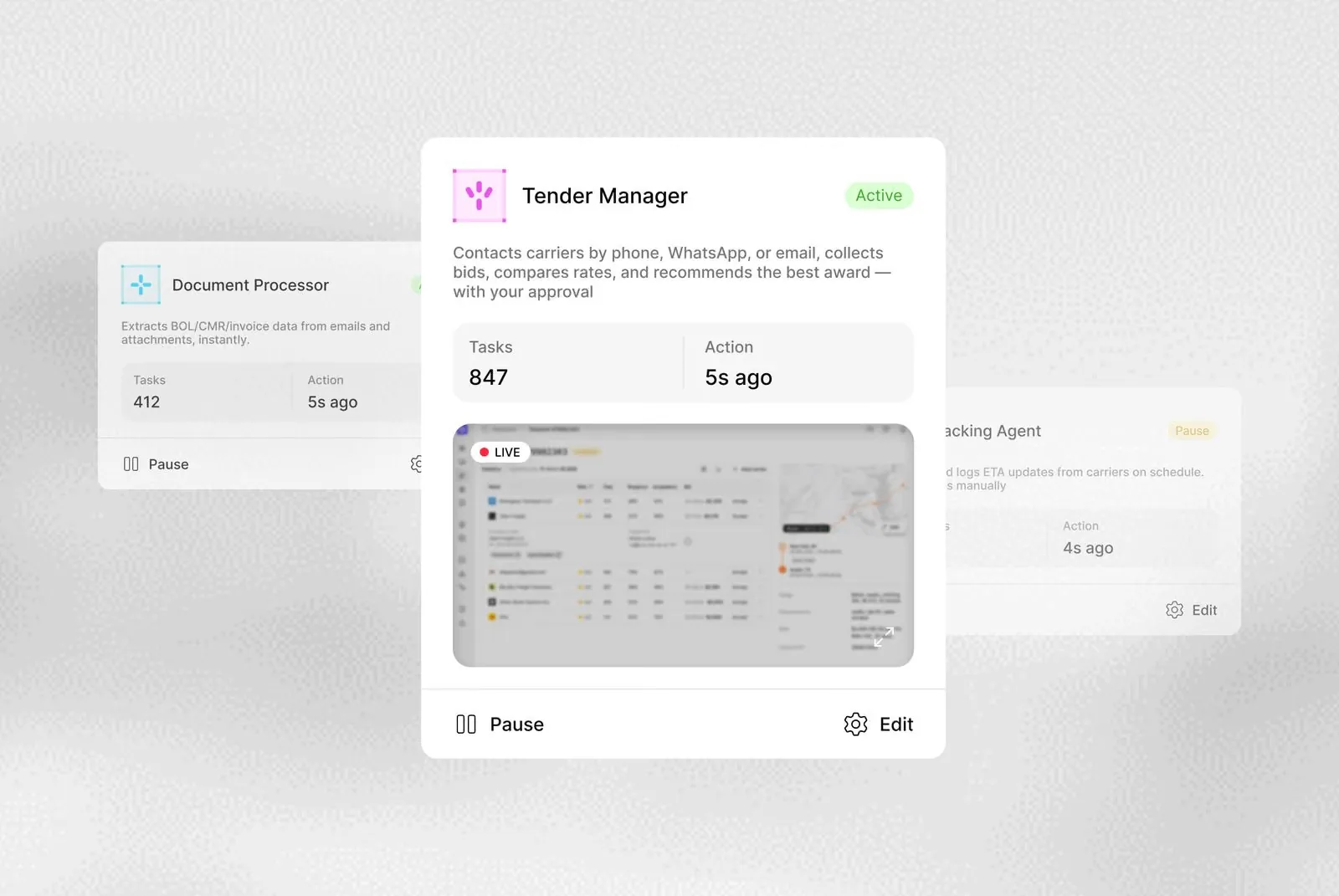
AI digital workers already take over this part of the job. In Cargofy, for example, a Digital Worker sends the tender, follows up with carriers by phone, email, and messenger, and logs every bid in one list, so all that’s left for your team is to review the bids and approve the winner.
How To Run Freight Tenders That Get More Freight Bids
Most tenders close with few freight bids for a few reasons, but they’re all tied to the simple fact that bidding costs the carrier time, and many tenders make that time a bad bet. Carriers skip tenders that need a portal login or a long form, and they quietly drop shippers who go silent after the bid. Good freight tendering, on the other hand, makes bidding the easy choice.
These best practices in freight procurement help fix the mechanics:
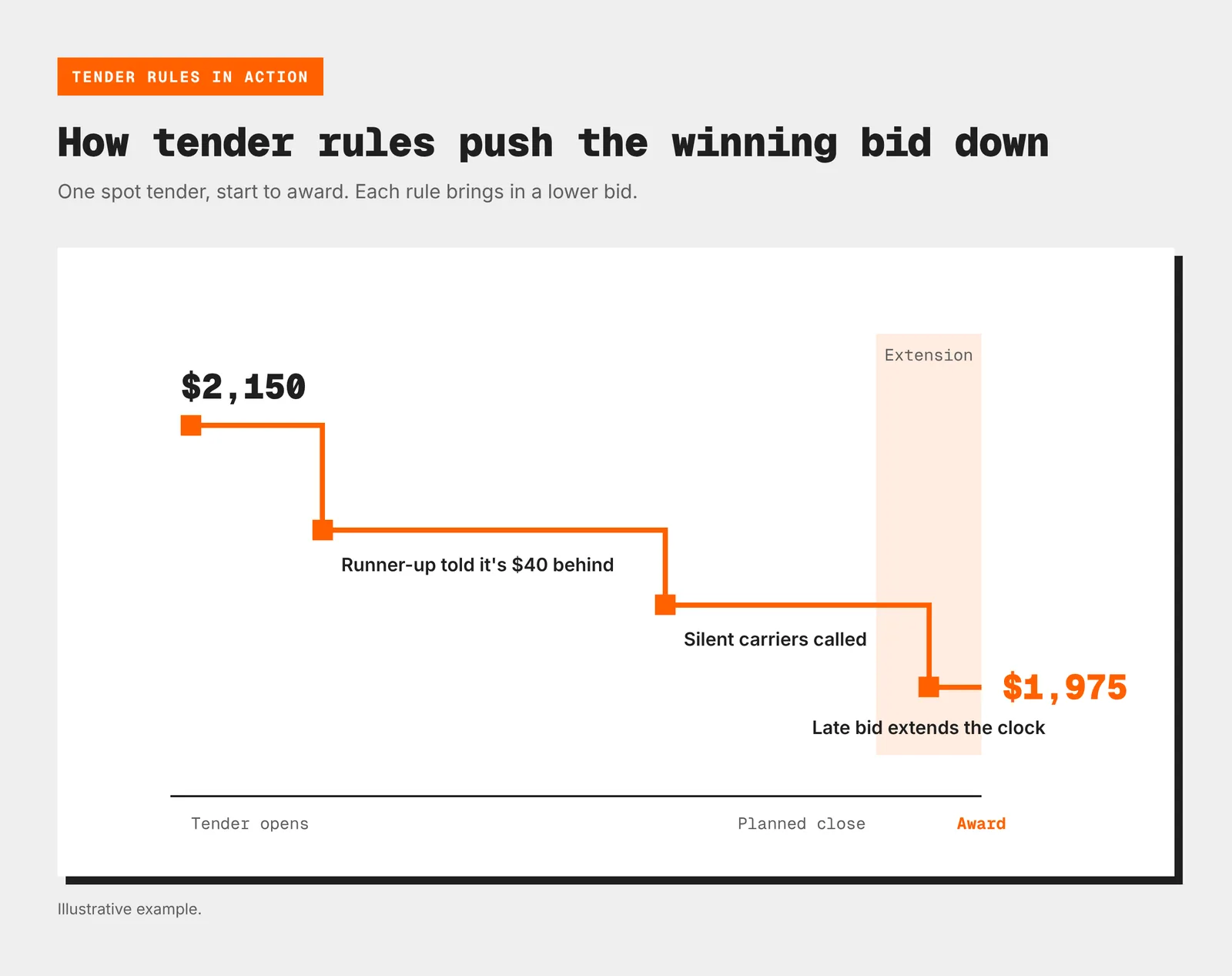
- Take bids where carriers already work → A small-fleet dispatcher lives in email and WhatsApp all day. Accepting a bid as a reply or on a phone call gets you quotes from carriers who would never open a portal.
- Show carriers where they stand → When a runner-up hears they’re $40 off the lead, they’ll often rebid. Without that feedback, however, the first bid is usually the last one.
- Chase silent carriers while the tender is open → A call 10 minutes before close can still turn into a bid, while a reminder after it closes only explains why you’re paying spot.
- Extend the clock for late bids → Auto-extension stops a tender from closing seconds after a competitive bid arrives, so the other carriers get a chance to answer it.
- Award fast and keep your word → Carriers remember who pays on time and who honors awards, and that memory will decide whether they bid next time or not.
Freight Rate Negotiation, Without the Back-and-Forth
Freight rate negotiation used to mean more rounds of phone calls after the bids came in. A well-built tender does most of that work by itself, because the bid step and runner-up feedback push carriers to compete against each other in rounds.
If you’re working out how to negotiate freight rates beyond the tender itself, start with a benchmark. Check the lane against a market index like DAT or SONAR before you set the target rate, so you know whether a bid is good or just the lowest one you got.
When negotiating freight rates, also look past linehaul, since fuel surcharge, detention, layover, and payment terms often move the total more than the base rate mentions. And if you can commit to a set number of loads a week on a lane (and actually tender them), most carriers will go lower just to lock that volume in.
KPIs for Freight Procurement Performance
Track these KPIs for freight procurement performance per tender and per lane, and review them every month. Freight procurement optimization starts with the bids per tender, since more bids give you a better award and a fallback carrier when the winner rejects:
| KPI | What it shows | Watch for |
|---|---|---|
| Bids per tender | How much competition each load gets | Tenders closing with fewer than 3 bids |
| Carrier response rate | Share of invited carriers who bid | Carriers who stop responding |
| Award rate vs benchmark | Winning rate against the market index for that lane | Awards that sit above market month after month |
| Tender acceptance rate | Share of awarded loads carriers actually take | Contract carriers rejecting loads |
| Time per tender | Hours your team spends from posting to award | More than an hour on a routine load |
Can AI Optimize Freight Procurement?
Yes, AI can optimize freight procurement, mostly by taking over the work that limits how many bids you get, which mostly involves chasing carriers and manually typing their bids into a list.
Most freight procurement software waits for carriers to log in and bid, while automated freight procurement goes to the carriers. AI agents reach them by email, phone, and WhatsApp, pull each bid out of the reply or call, and flag anything above your target rate. They also follow up with every silent carrier before close, which often leads to favorable last-minute bids.
Whichever AI for freight procurement you look at, test it on two key things — whether it brings in more bids, and whether your team still makes the award, since there are other things at play like past relationships.
Cargofy’s Digital Workers for Freight Procurement
Cargofy’s Freight Procurement puts a Digital Worker on every tender you run. You create the tender once, and a Digital Worker first sends it to your contracted carriers, then to Cargofy’s network and load boards. It emails, calls, and messages carriers, pulls bids from their replies and calls, and enters them into one neat comparison list.
Runners-up get a call telling them how far they are from the lead, and if no bids have come in 5 minutes before close, the Digital Worker calls carriers in your network. Your team reviews the bids and finally approves the winner.
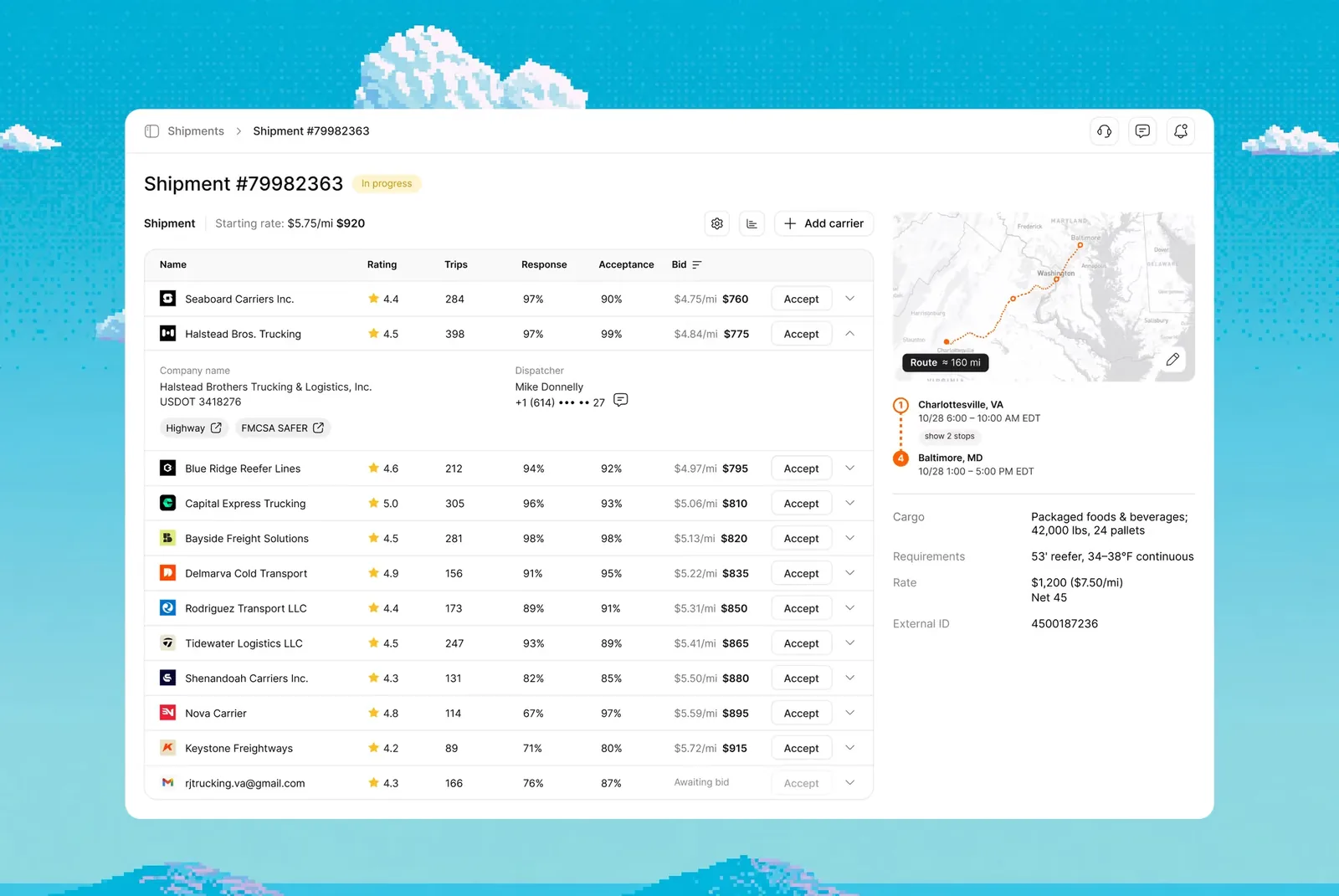
That’s how our customers report 4x more bids per tender, a 96% carrier response rate, and about 2 hours saved per tender. For instance, retail chain Avrora Multimarket ran 75,000+ tenders this way and saved more than $7M in 2024.
You configure the tender rules and the Digital Worker’s call script, and shipments can come in straight from your TMS or ERP, with the winning carrier and rate written back. Once the award is made, documents, tracking, and payment status run inside the same tender, so Cargofy also covers what happens after the bid.
See how Cargofy's freight procurement digital workers run your tenders and carrier follow-up. Explore Freight Procurement →
Start With Your Next Tender
You don’t need a new RFP cycle to get more competitive bids. Move your problem lanes to mini-bids, set a target rate and bid step on every spot tender, call silent carriers before close, and track bids per tender against last month.
Every tender that closes with two bids leaves money on the lane. Book a demo and see how Cargofy’s Digital Workers chase every carrier on every load, so your team only has to approve the award.