

What Is Detention Pay In Trucking? How To Track It And Get Paid


Every load comes with an appointment time, but nothing guarantees the dock will be fully ready by the time your truck pulls in. Waiting is part of the job, and ATRI’s 2024 detention study found that drivers were held at almost 40% of their stops.
Past the free time at the dock, though, that wait becomes billable, and detention pay is what carriers charge for it. Sending the bill is routine, but it’s also not uncommon for detention claims to get disputed or never paid at all. This guide covers how detention pay in trucking works, how much it pays, how it differs from layover pay, and how to document the wait so your claims hold up and get paid.
What Is Detention in Trucking?
Detention in trucking is the time a truck is held at a shipper or receiver past the agreed free time, waiting to be loaded or unloaded. Detention pay is the compensation for that time, billed by the carrier to whoever booked the load.
What it really makes up for is lost driving time, since under the hours-of-service rules, detention time in trucking counts toward the driver’s 14-hour on-duty window but not the 11-hour driving limit. This means that every hour at the dock is an hour the truck can’t spend earning, so a four-hour wait at a receiver can easily cost the driver the next load, or push the following delivery into the next day.
How Does Detention Pay Work?
Detention pay works on a clock that starts at the appointment time. Most contracts usually allow two hours of free time, and the Congressional Research Service calls this “an unofficial industry standard”, though some may give one, others up to four. Once it’s up, the carrier bills for every hour until the truck leaves, usually in 15 or 30-minute increments, with the rate set in the contract or rate confirmation.
That makes the arrival time the key number every detention claim rides on. A facility’s check-in log and the truck’s GPS arrival can disagree by half an hour, and when they do, the side with its own timestamp usually wins the argument.
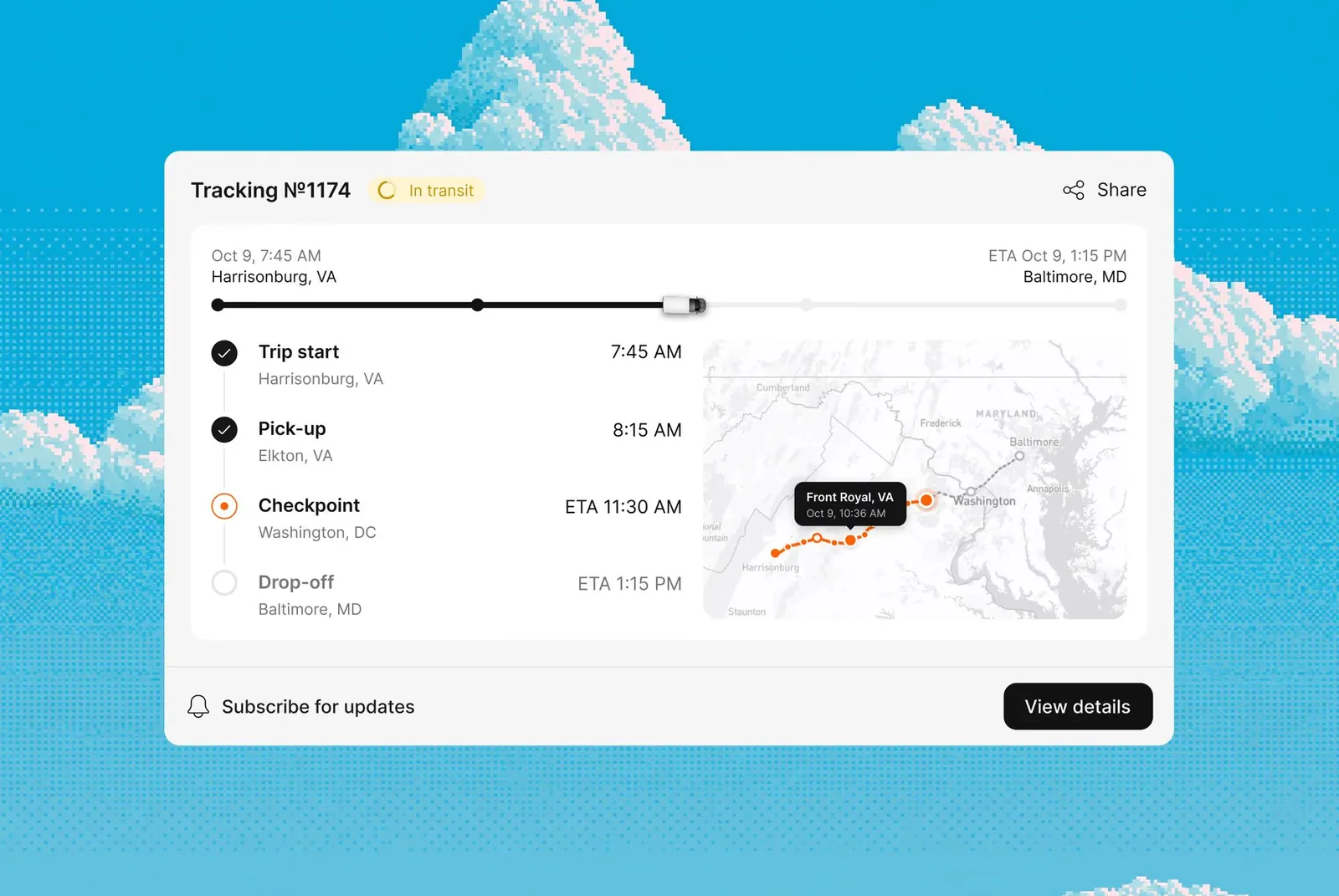
Cargofy Tracking gives carriers and brokers that timestamp without anyone having to write it down. Location comes from the Cargofy Go driver app or the carrier’s telematics, and every stop status is logged in the shipment record with its time. If a driver doesn’t use the app, an AI Digital Worker asks for the location and status by messenger or phone and writes the answer into the trip, so the stop still has a time on record when the detention claim goes in.
Who Pays Detention?
Who pays detention in the end comes down to who caused the delay, but the money moves through every link in the chain. The shipper or receiver that held the truck pays the broker, the broker pays the carrier, and the carrier pays its driver. On direct freight, the shipper pays the carrier with no broker in between.
Detention pay for truck drivers follows a different set of rules. Company drivers get whatever their carrier’s pay policy says, which is usually a flat hourly rate after free time and often less than what the carrier bills. Owner-operators then, with their own authority, bill the full amount themselves.
How Much Is Detention Pay for Truckers?
Truckers deal with two different numbers here: the hourly rate a carrier bills for detention, and the rate that actually reaches the driver. Most rate confirmations list detention somewhere between $40 and $100 an hour for standard freight, with specialized and hazmat loads at the top of that range or even above that.
The amount drivers collect is, of course, lower, with one survey finding that the average detention pay received by owner-operators was about $47 to $50 an hour, while company drivers got just $28, since their carrier pays them a set rate out of what it bills.
The data is a few years old, but it’s still the closest thing to a published average detention pay for truck drivers.
How To Calculate Detention Pay
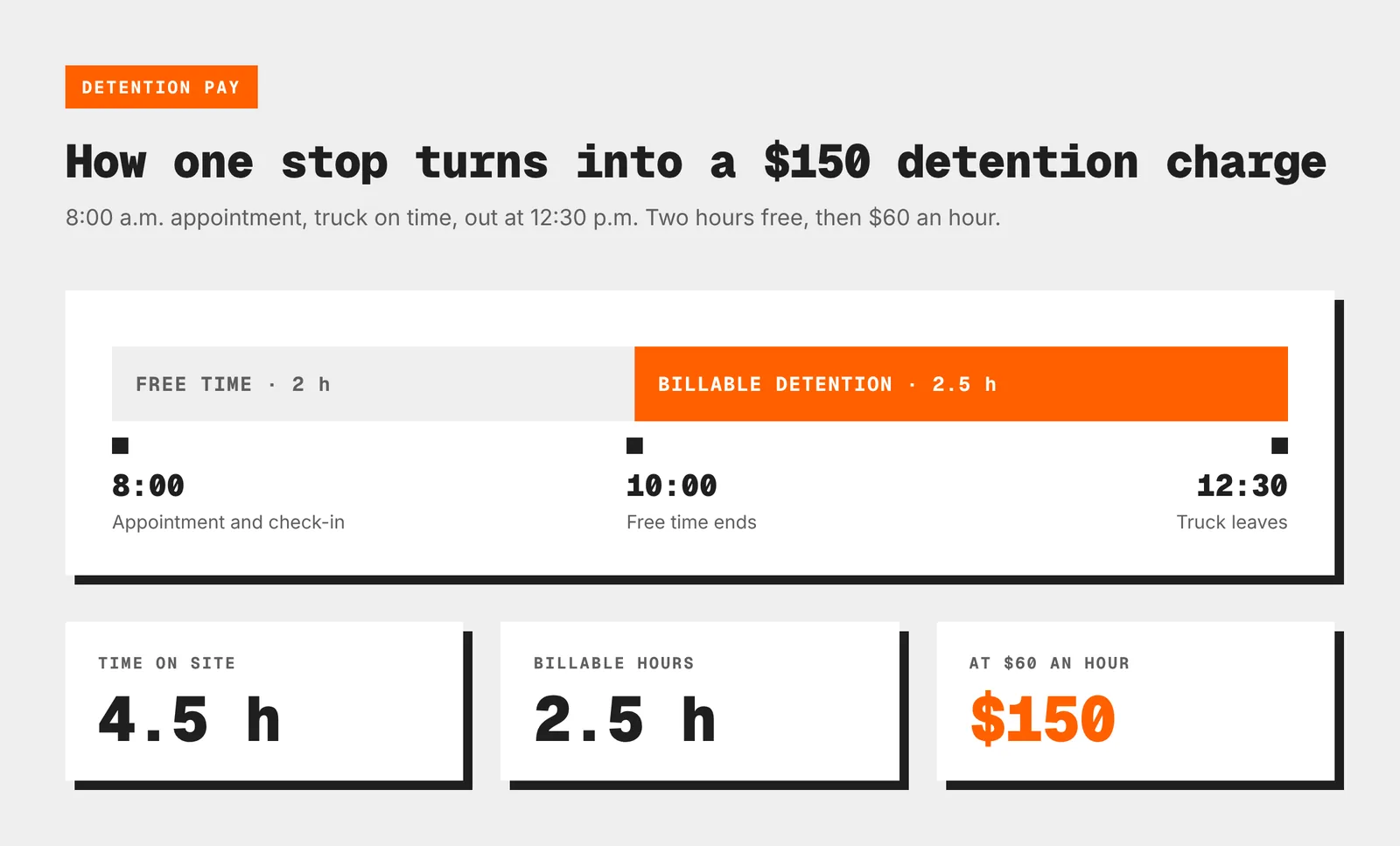
Here’s how to calculate detention pay: take the time on site, subtract the free time, round the result to the contract’s billing increment, and multiply it by the detention rate. On a typical stop, that may look something like this:
- The appointment is at 8:00 a.m., and the truck checks in on time.
- The truck is unloaded and out at 12:30 p.m., which makes it 4.5 hours on site.
- Two hours of free time leave 2.5 billable hours.
- At $60 an hour, the detention charge comes to $150.
Before agreeing to a rate, check it against what the truck would realistically earn on the road. A truck running freight at $2.50 a mile and averaging 50 mph brings in about $125 an hour, so a $50 detention rate still leaves $75 on the table for every hour at the dock.
That’s why, at the very least, a detention rate should cover what the truck costs you per hour, which is your cost per mile multiplied by your average speed.
Layover vs Detention Pay
Detention pays by the hour for waiting at a dock, whereas layover pays a flat daily amount when the delay holds the truck into the next day, usually after about 24 hours, and the driver can’t run another load in the meantime.
| Detention pay | Layover pay | |
|---|---|---|
| Trigger | Waiting past free time at a pickup or delivery | A delay that holds the truck overnight or for about 24 hours |
| Paid as | An hourly rate, in 15, 30 or 60-minute increments | A flat amount per day |
| Typical start | After 2 hours of free time | After about 24 hours, per the contract |
| Where it’s set | The rate confirmation or carrier contract | The rate confirmation or carrier contract |
In short, layover pay in trucking is meant to cover a lost day, so some contracts simply switch from detention to layover once a wait passes a daily cap.
How To Get Detention Pay (and Why Claims Get Denied)
Nearly every carrier bills detention, about 95% according to the same ATRI study, but what’s interesting is that fewer than half of those invoices get paid. Most denials come down to the same few gaps, and the six steps below show how to get detention pay by closing each one.
- Put the terms in the rate confirmation before you accept the load: That includes the free time, hourly rate, billing increment, whether the clock starts at the appointment or at check-in, the notice requirement, any daily cap, when layover kicks in, and the invoice deadline. If the rate con says nothing about detention, there’s nothing to bill against.
- Arrive on time and record it independently: Keep the appointment confirmation and an ELD or GPS arrival time. A late arrival is the first thing a shipper or broker checks when a claim comes in.
- Notify the broker or dispatcher before free time runs out: Send the arrival time, the check-in time, and a note that the free time is about to run out. Many brokers only accept detention they heard about during the delay, not after delivery.
- Get in and out times on the bill of lading: Ask the shipper or receiver to write and sign them before the truck leaves. A signed BOL with both times settles most disputes before they ever start.
- Bill fast, with the proof attached: Put the detention fee on the invoice as its own accessorial line, and send the timestamps, the signed BOL, and the notice messages with it. Many brokers want detention claims within 24 to 48 hours of delivery.
- Follow up and track what’s owed: Keep a running list of open detention claims and of the facilities that hold trucks the longest. For the worst of them, build the wait into the rate from the start or stop taking loads that go there.
The same proof protects brokers and shippers too. A broker can only pass detention through to the shipper when the carrier’s times match what the facility recorded, and a shipper can only push back on a bad charge when it has its own dock times to compare.
How Cargofy Tracks Detention Time and Gets It Paid
Getting detention paid comes down to timestamps the other side can’t argue with and a payment status everyone can see. Cargofy covers that work across three products, from recording when each truck arrived and left, and then turning that into detention claims and tracking them until they’re paid:
- Tracking logs the status and time of every stop, and its delay alert warns the manager when a trip falls behind schedule, so notice can go out before the free time runs out.
- For shippers that run their own docks, Facilities has a Digital Worker book dock slots and record check-in and check-out times for every truck. That shows the real dwell time at each facility and for each carrier, and on average it cuts waiting at the dock by 30%.
- Finance then checks carrier invoices against the agreed rate and accessorials, and flags any differences. Its Detention dispute workflow builds the case from geofence and gate timestamps, and the payment status stays visible to both sides. The Settlement Manager worker reminds the other side when a payment is due, and again when it’s late.
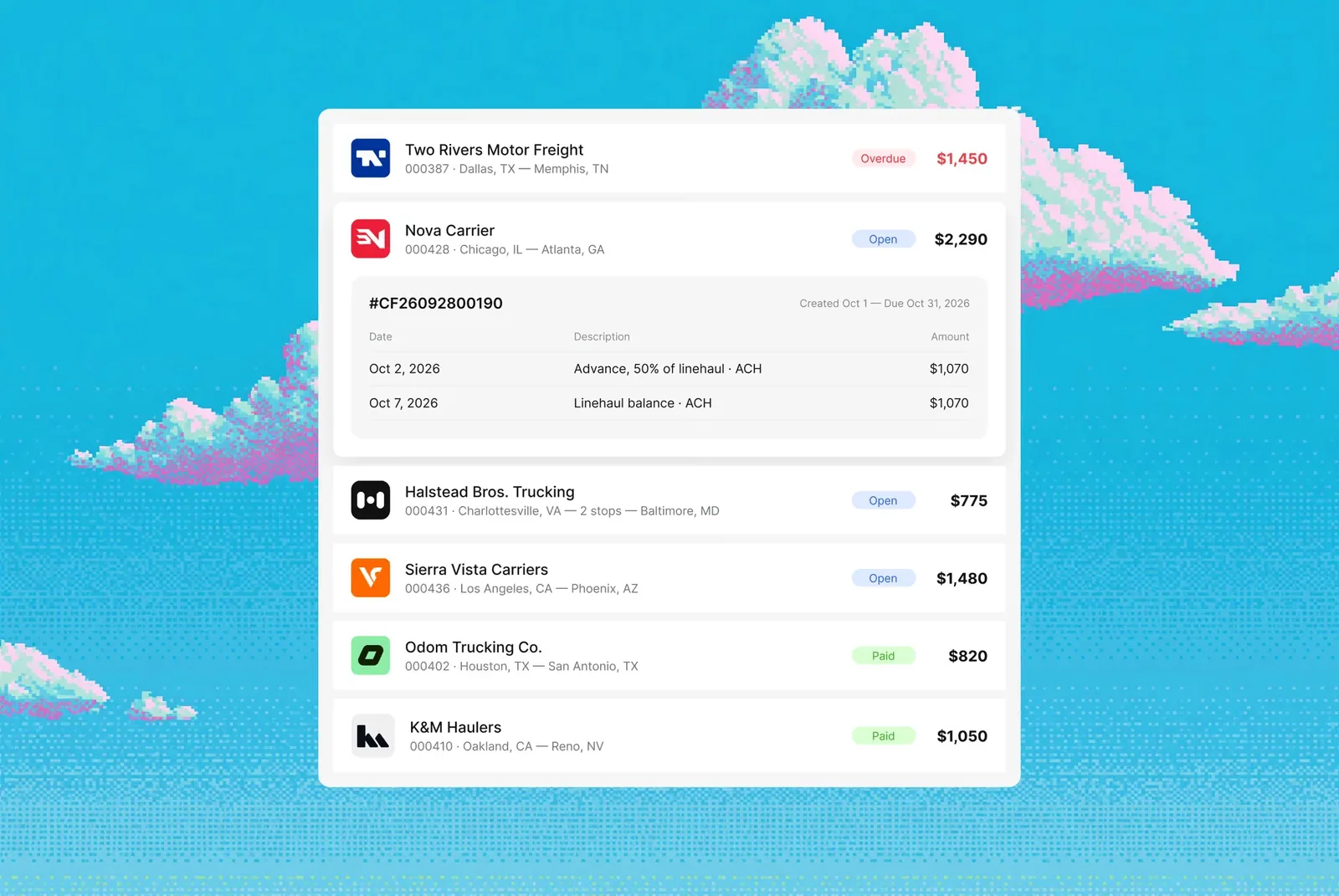
Get paid for the hours your trucks spend waiting, with every claim built from gate and geofence timestamps. Explore Finance →
Make Detention a Line in Every Rate Con
Whether detention gets paid is usually decided before the invoice goes out, by what’s in the rate con and what’s on record from the stop. Before the next load, check that the rate confirmation spells out the free time, hourly rate, billing increment, and invoice deadline, then log arrival and departure at every stop and get the times signed on the BOL. Bill the detention the day the truck leaves, with the proof attached, and keep a list of the facilities that hold trucks the most so the next rate already covers the wait.