

What Does Deadhead Mean in Trucking? The Real Cost and How To Cut It


A rate confirmation pays for the miles between pickup and delivery. Your truck, on the other hand, pays for every mile it drives, and that includes the ones it runs empty to reach that pickup or to get back home. Those miles have a name in trucking, and oftentimes, they quietly eat a big share of the margin on a load.
So, what does deadhead mean in trucking? Simply put, it’s running a truck with an empty trailer, so those miles earn nothing, yet the costs keep running. This guide covers what deadhead miles cost you per load and per truck, how to measure your deadhead percentage, and how to cut it to increase your margins.
What Are Deadhead Miles?
Deadhead miles, or as most say, empty miles, are the miles a truck drives while pulling an empty trailer, which often occurs from a delivery to the next pickup or back to home base.
The deadhead meaning in trucking often gets mixed up with bobtailing. A bobtail is a tractor running with no trailer attached, while a deadhead truck still pulls one, just with nothing in it. Both earn nothing, but those bobtail miles are lighter on fuel.
Backhaul vs deadhead is the other common mix-up. Backhaul is the paid load that keeps a truck from deadheading on the return trip, which is why many carriers start looking for one right after booking a long front haul.
Some deadhead mileage is unavoidable, because a truck delivering into a small town with little outbound freight will still probably have to reposition before it can reload. So the realistic goal is really to keep the deadhead under control, since nobody runs at zero.
Do Truckers Get Paid for Deadhead Miles?
In most cases, truckers don’t get paid for deadhead miles directly. Brokers quote spot rates on the loaded miles, so the owner-operators bear the cost of deadheading, which comes out of the margin on the load itself.
For company drivers, it ultimately depends on their pay plan. Some carriers pay for every mile driven, others pay only for loaded (dispatched) miles, and a third group will start paying deadhead after a set number of empty miles.
Deadhead pay is still negotiable when the nearest reload is far away, and carriers usually either price the repositioning into the rate or ask the broker for a special deadhead charge on top of it. Brokers rarely agree to it as a separate line item, but the all-in rate is open to negotiation, so showing the deadhead in the math is a solid way to move forward.
The Real Cost of Deadhead Trucking
Deadhead trucking costs almost as much per mile as hauling freight, only with none of the revenue. ATRI’s 2026 Operational Costs of Trucking update puts the average cost of running a truck at $2.336 a mile in 2025, which is a record by the way, and found that 16.5% of non-tank miles ran empty that year. As you can imagine, that’s a lot of potential revenue left on the table.
An empty trailer saves a little on fuel, but most other costs don’t change. Fuel is still the biggest one, but there are also tires, maintenance, insurance, and truck payments that keep running per mile too.
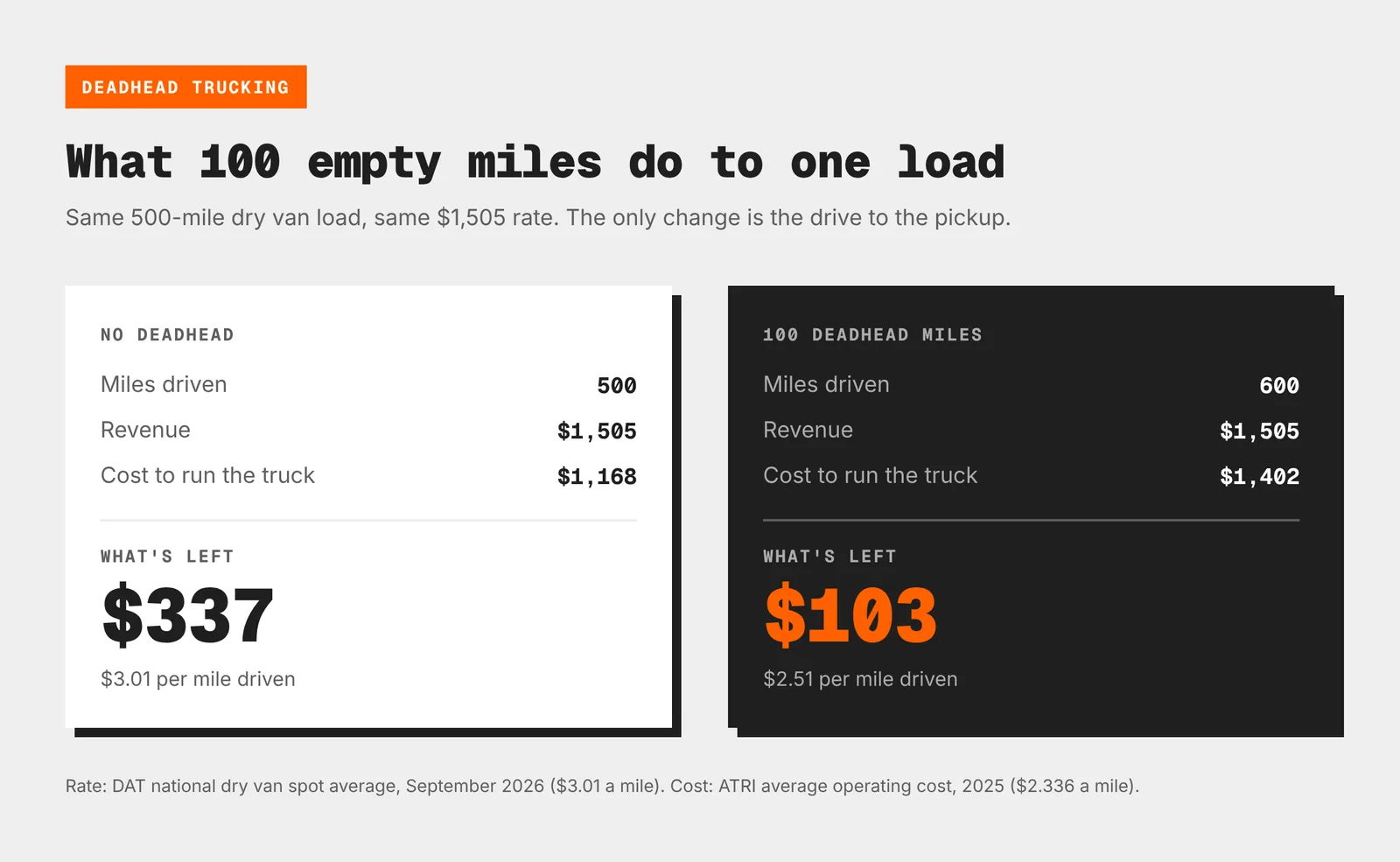
Here’s what 100 deadhead miles do to a single 500-mile dry van load at the national spot average of $3.01 a mile (September 2026), with costs at ATRI’s $2.336:
| No deadhead | 100 deadhead miles | |
|---|---|---|
| Miles driven | 500 | 600 |
| Revenue | $1,505 | $1,505 |
| Cost to run the truck | $1,168 | $1,402 |
| What’s left | $337 | $103 |
| Revenue per mile driven | $3.01 | $2.51 |
As you can see, the load pays the same either way, but the truck keeps less than a third of the margin once the deadhead is counted. Over a full year, the gap grows further, as shown in ATRI’s average truck running about 86,000 miles in 2025. At 16.5% deadhead, that’s roughly 14,200 empty miles and $33,000 in costs with nothing to show for them.
Two more costs are often overlooked here as well:
- Hours of service: under FMCSA rules, driving time is all time spent at the controls of a truck in operation, loaded or not, so every deadhead hour comes out of the same 11-hour driving limit as paid freight.
- IFTA: deadhead miles go into your total miles on the IFTA return, and miles driven in IFTA jurisdictions are generally taxable, so you pay fuel tax on deadhead too.
Those costs pile up fast without thorough and proactive planning, when nobody knows a truck is about to run empty until the driver calls in from the dock.
At Cargofy, we build AI digital workers for logistics teams, and our Planner is designed for that exact blind spot. It shows what every truck in the fleet is doing each day of the week, including trips, idle days, and repairs.
This way, a dispatcher can see that one of its trucks is unloading in Atlanta tomorrow but has nothing booked after it, and then start a load search from Atlanta while it’s still on the road (while the Digital Worker keeps the search running and sends the bids for them).
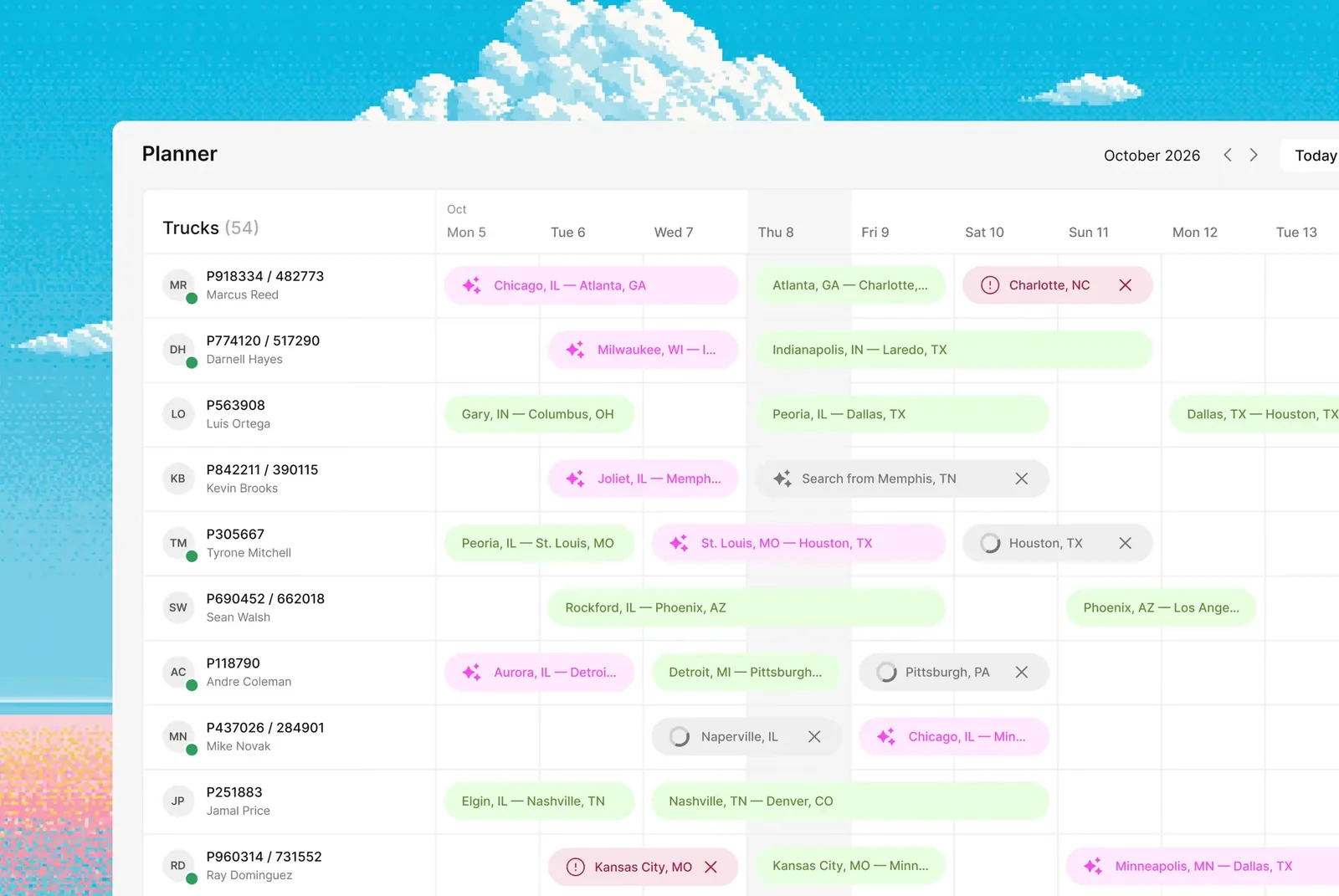
The Planner helps users run 15% fewer empty miles on average, with every truck planned 48 hours ahead. And if we apply that to ATRI’s averages, we’re talking about 2,100 fewer deadhead miles and close to $5,000 saved, per truck, each year.
See which truck goes empty tomorrow and line up its next load today. Explore Planner →
How To Calculate Deadhead Miles
To calculate deadhead miles, record the empty miles on every trip, divide them by total miles for the period, and multiply by 100. That gives you your deadhead percentage, the real number worth tracking:
- Log empty miles for every trip: Take them from the odometer or the ELD, from the last drop-off (or home base) to the next pickup.
- Work out your deadhead percentage: deadhead % = empty miles ÷ total miles × 100. So a truck that ran 9,000 miles last month with 1,300 of them empty sits at 14.4%.
- Compare it with a reference point: ATRI’s 16.5% is a fleet-wide average and by no means a hard target, so the more useful comparison is your own trend, truck by truck and lane by lane.
- Check the effective rate on each load: Divide what the load pays by loaded plus deadhead miles, then compare the result with your cost per mile. If it comes in below that number, the load would lose money, no matter what the posted rate says.
Run these numbers weekly, since monthly totals can hide the one or two recurring lanes that send a truck back empty every time.
How To Reduce Deadhead Miles
In most cases, deadhead is really a timing problem, because the next load gets booked after the truck is already empty, when the good freight near the drop-off is gone, and the only options are a long reposition or a cheap load home. These six habits below help make the search proactive and put deadhead into every load decision:
- Search for the reload before delivery: Start 24 to 48 hours before the truck unloads, beginning with loads that have the pickup near the drop-off.
- Check where a load ends before you take it: A competitive rate into a market with little outbound freight can end up costing more in deadhead than it pays, so price the way out into the load or pass on it.
- Plan round trips and triangles: Line up a backhaul, or a third leg that brings the truck back toward home, before committing to a long one-way run.
- Price long repositioning into the rate: If the nearest load is 150 miles away, quote the rate that covers those miles, and walk away if the broker won’t move, since you may in fact end up losing money on that load.
- Build repeat lanes: Regular freight with the same shippers and brokers means the reload is known before the truck leaves, which removes the guesswork from the return leg.
- Track deadhead by truck and by lane: Drop or reprice the lanes that keep sending trucks back empty.
The interesting thing here is that even a small change adds up fast. If we take ATRI’s averages, just cutting deadhead from 16.5% to 14.5% will save you about 1,700 deadhead miles per truck each year, which is roughly $4,000. For a 10-truck fleet, that’s $40,000 saved a year, and that’s without hauling a single extra load.
How Cargofy Helps Cut Empty Miles
Cutting deadhead comes down to knowing which trucks will go empty next and then finding them a load before that happens, and Cargofy’s carrier tools cover both steps of this process.
The Planner shows what every truck is doing throughout the week in one neat calendar, including all the trips, idle time, repairs, and time off.
Load Hub then runs the search itself, pulling loads from your email, your connected load boards, and shippers on the Cargofy platform into one table, so you don’t have to switch between board tabs and inboxes.
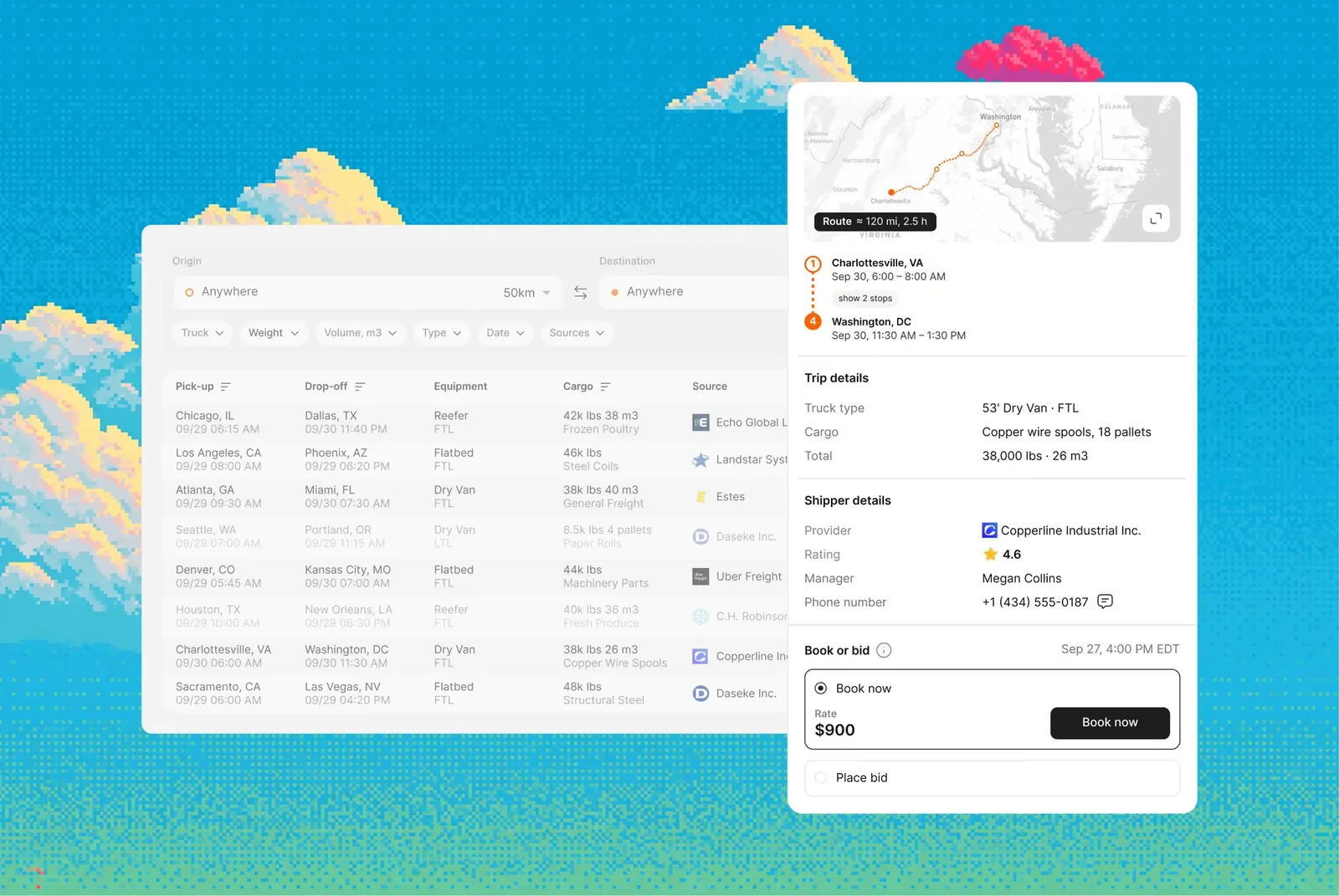
Saved lane alerts also flag loads near the truck’s drop-off and keep running around the clock. And when a load that fits is found, a Digital Worker sends the bid or booking request and waits for your final confirmation.
Find the next load before your truck unloads, and stop paying for the miles home. Explore Load Hub →
Measure Your Deadhead, Then Book Ahead
The deadhead miles meaning is simple — the miles you pay to drive that the load doesn’t. At ATRI’s averages of $2.336 a mile and 16.5% of miles running empty, that’s around $33,000 for each truck a year that never shows up on a rate con.
Start with last month’s numbers by working out the deadhead percentage for each truck, then find the lane behind most of the empty miles, and make that your starting point by beginning the reload search a day or two before the next delivery on it. And as a good rule of thumb, when the closest load is still 150 miles away, price those miles into the rate or pass on the offer.